
%20with%202,000mg%20of%20whole-fruiting-bod...)
Mushcoffee: Why Four Mushrooms Beat One (And Half the Caffeine Changes Everything)
Instant coffee has a reputation problem. Mushcoffee is here to fix it.
In short: Gribb's Mushcoffee is a functional coffee product combining organic Arabica (50%) with 2,000mg of whole-fruiting-body mushrooms (12.5% each: Reishi, Lion's Mane, Chaga, Shiitake) grown on Gribb's certified-organic farm in Portimão, Portugal. The product is PT-BIO-10 certified, and delivers roughly half the caffeine of a standard coffee cup. It dissolves in hot or cold liquid without equipment.
Not because it's "cleaner." Not because it has adaptogens and a story. Because it starts with premium organic Arabica — not the cheap robusta that gives instant coffee its bitter aftertaste — and then adds 2,000mg of four certified-organic whole-fruiting-body mushrooms, every single one grown on our own farm in Portugal. That last part matters more than any label on the market wants you to realise.
The problem with most mushroom coffee
Walk into any wellness retailer and you'll find mushroom coffee promising focus, calm, and "jitter-free" energy. What most of these products have in common: they use mushroom powder sourced from large-scale third-party suppliers, often containing mycelium grown on grain rather than actual fruiting bodies. They don't tell you how much of each mushroom is in a serving. And they often include just one or two species, rotating depending on what's cheapest.
A quality-consistency analysis of Ganoderma lucidum (reishi) supplements sold in the US found that only about 26% of tested batches matched their label claims [1]. That figure isn't specific to coffee blends — but it reflects the broader gap between what's on the packaging and what's in the cup.
What's actually in Mushcoffee
Every serving of Mushcoffee contains exactly this:
| Ingredient | Amount | Type |
|---|---|---|
| Organic Arabica instant coffee | 2.5g (50%) | Premium grade |
| Reishi — Ganoderma lucidum | 625mg (12.5%) | Whole fruiting body, grown in Portugal |
| Lion's Mane — Hericium erinaceus | 625mg (12.5%) | Whole fruiting body, grown in Portugal |
| Chaga — Inonotus obliquus | 625mg (12.5%) | Whole fruiting body, grown in Portugal |
| Shiitake — Lentinula edodes | 625mg (12.5%) | Whole fruiting body, grown in Portugal |
| Total per 5g serving | 2,000mg mushrooms | PT-BIO-10 certified |
No fillers. No mycelium on grain. The mushroom percentage is disclosed, not hidden inside a proprietary blend.
Why these four, specifically
This isn't a species list assembled from a catalogue. These are the four mushrooms that grow in our Portimão facility, and each has a distinct, researched mechanism:
Reishi (Ganoderma lucidum) — the nervous system anchor Reishi's ganoderic acid triterpenes are fat-soluble and require alcohol extraction to access fully — which is why we dual-extract everything, including what goes into Mushcoffee. Animal research has found that G. lucidum extract increased total sleep time and improved sleep quality, with a serotonin-involved pathway identified as one mechanism [2]. In a morning coffee context, reishi is the species most associated with a smoothing effect on the stress response — not sedation, regulation.
Lion's Mane (Hericium erinaceus) — the cognitive layer Lion's Mane contains hericenones and erinacines, studied for Nerve Growth Factor (NGF) synthesis support in the hippocampus and prefrontal cortex [3][4]. Two separate double-blind, placebo-controlled trials have shown cognitive improvements with sustained use, and an acute single-dose crossover study found measurable effects on cognitive performance within 90 minutes [5]. Lion's Mane is why Mushcoffee is more than a caffeine delivery mechanism.
Chaga (Inonotus obliquus) — the antioxidant base Chaga is one of the most antioxidant-dense substances found in nature, studied specifically for its immunomodulatory polysaccharide compounds. One caution worth being transparent about: chaga is high in oxalates, so if you have a history of kidney stones, chronic high-dose use warrants a conversation with your doctor. At the dose in a daily serving of Mushcoffee, this is a minor consideration for most people — but it's honest to say it.
Shiitake (Lentinula edodes) — the gut-brain bridge Shiitake is the least-discussed species in most mushroom coffee conversations, which is a missed opportunity. Its key bioactive compound, lentinan, is a beta-glucan that has been specifically studied for immunomodulation. More relevantly: research published in the Journal of Translational Medicine found that L. edodes beta-glucan prevented cognitive impairments via the gut-brain axis in animal models — maintaining gut integrity and reducing neuroinflammation markers simultaneously [6]. This is the gut-brain connection that makes four species meaningfully different from just stacking the two most-marketed ones.
Half the caffeine: what it actually means
Organic Arabica makes up 50% of each serving (2.5g per 5g scoop). Arabica naturally contains less caffeine than robusta, typically around 1.2–1.5% caffeine by weight. Per standard 5g serving of Mushcoffee: approximately 30–40mg caffeine per cup, compared to 80–100mg in a regular instant coffee and 100–150mg in a brewed cup [7]. That's not a quarter-caffeine product and it's not caffeine-free — it's a precision reduction that removes the jitter threshold for most people without removing the functional caffeine effect entirely.
The honest dose question
There's a real gap between the dose in a daily cup and the doses used in the studies cited for each mushroom species. Clinical trials for Lion's Mane have used 2.4–3g daily for sustained effects; the 625mg per serving in Mushcoffee is below that range. We say this not to undermine the product but because you deserve to know how to think about it correctly: Mushcoffee is a daily functional ritual, not a clinical intervention. The cumulative effect of consistent daily use across four species, plus the caffeine reduction and smoother energy curve, is the actual product you're buying — not a pharmaceutical-level dose of a single compound.
The Gribb difference: why "grown in Portugal" is load-bearing
Every mushroom in Mushcoffee was grown on our farm. That's not a marketing line — it means we control the substrate (sawdust from local Monchique woodshops), the harvest timing (which affects compound concentration), and the extraction process. No third-party supplier, no bulk powder of unknown age or origin. This is the only version of transparency that actually means something, and it's why we built a farm instead of a sourcing network.
FAQ
Does Mushcoffee have caffeine? Yes — approximately 30–40mg per serving, roughly half a standard instant coffee, from organic Arabica. Not zero caffeine.
What mushrooms are in Mushcoffee? Four whole-fruiting-body mushrooms grown on Gribb's own farm in Portugal: Reishi, Lion's Mane, Chaga, and Shiitake — 625mg each, 2,000mg total per serving.
Is Mushcoffee organic? Yes. PT-BIO-10 certified, verified by NATURALFA. All four mushrooms and the Arabica base.
What does Mushcoffee taste like? Smooth, rich, slightly earthy — distinctly better than standard instant coffee. The mushrooms add depth rather than a strong flavour of their own.
Can I drink Mushcoffee every day? Yes. It's designed for daily use. Chaga caution applies for anyone with a history of kidney stones due to oxalate content; everyone else can use it as a regular morning ritual.
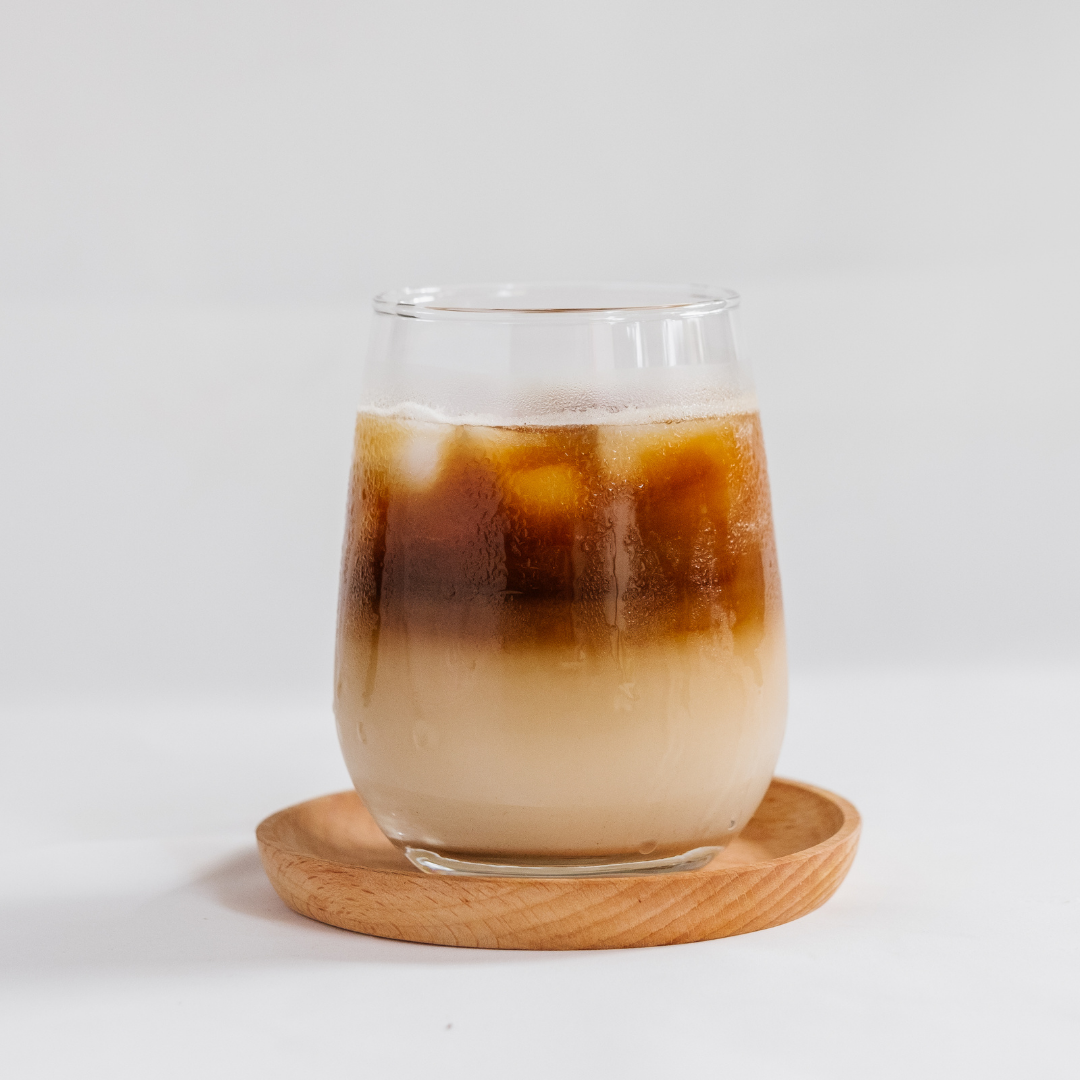
Does it work iced? Yes. Dissolve in a small amount of hot water first, then pour over ice.
How much mushroom is actually in each serving? 2,000mg total — 625mg of each species. This is disclosed openly, not hidden in a proprietary blend.
Is this a meal replacement? No. It's a functional coffee, not a meal.
This product is not intended to diagnose, treat, cure, or prevent any disease.
References
- Evaluation on Quality Consistency of Ganoderma lucidum Dietary Supplements Collected in the United States. PMC. https://www.ncbi.nlm.nih.gov/pmc/articles/PMC5552695/
- Ganoderma lucidum Promotes Sleep Through a Gut Microbiota-Dependent and Serotonin-Involved Pathway in Mice. Scientific Reports. https://www.nature.com/articles/s41598-021-92913-6
- Mori K, et al. (2009). Phytotherapy Research, 23(3), 367–372.
- Saitsu Y, et al. (2019). Biomedical Research, 40(4), 125–131.
- Acute Effects of a Standardised Extract of Hericium erinaceus on Cognition. PMC. https://www.ncbi.nlm.nih.gov/pmc/articles/PMC12018234/
- Pan W, et al. (2021). β-Glucan from Lentinula edodes prevents cognitive impairments. Journal of Translational Medicine. https://www.ncbi.nlm.nih.gov/pmc/articles/PMC7863530/
- Mushroom Coffee: What It Is, Benefits, and Downsides. Healthline. https://www.healthline.com/nutrition/mushroom-coffee
Read more
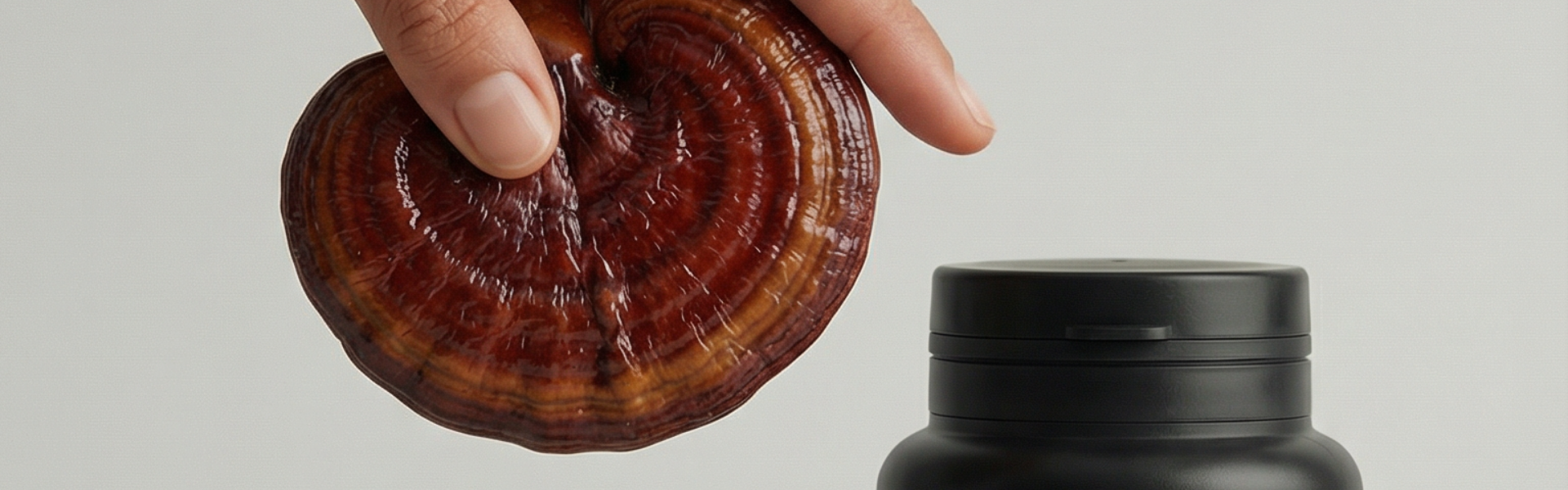
Reishi: The Complete, Evidence-Based Guide
Reishi Mushroom: The Complete, Evidence-Based Guide Reishi shows up everywhere in this category — sleep blends, stress blends, skin blends, "calm" anything. Most of that attention is earned. Some o...
Read more
Reishi vs Melatonin: The 2026 Study That Changes the Sleep Conversation
A new randomised trial presented at SLEEP 2026 found reishi extract outperformed melatonin for chronic insomnia over 8 weeks. Here's what it means, what it doesn't, and where Gribb's Reishi sits in...
Read more