


Reishi vs Melatonin: The 2026 Study That Changes the Sleep Conversation
A new randomised trial presented at SLEEP 2026 found reishi extract outperformed melatonin for chronic insomnia over 8 weeks. Here's what it means, what it doesn't, and where Gribb's Reishi sits in this picture.
Reishi mushroom extract (980mg/night, 6% triterpenes) outperformed melatonin 5mg in reducing Insomnia Severity Index scores in a 2026 RCT: –8.7 vs –5.6 at 8 weeks. This is a single short-term trial presented as a conference abstract; it does not yet change clinical recommendations. Mechanism: reishi operates via GABA-A receptor modulation and gut microbiome-serotonin pathway, distinct from melatonin's circadian mechanism.
Something happened at the SLEEP 2026 conference last month that nobody in the functional mushroom world has written about yet. We are.
A randomised controlled trial comparing reishi mushroom extract to melatonin for chronic insomnia found that after 8 weeks, reishi produced meaningfully better outcomes on the Insomnia Severity Index — a validated clinical scale — than the world's most widely used sleep supplement. Let's look at this carefully, because there's a right way and a wrong way to interpret it.
The study, precisely
The trial enrolled 218 adults with chronic insomnia, randomised 1:1 to either melatonin 5mg nightly or reishi mushroom extract 980mg nightly, standardised to 6% triterpenes. The primary outcome was change in Insomnia Severity Index (ISI) score from baseline to week 8 [1].
Results:
- Reishi group: mean ISI change of –8.7 points
- Melatonin group: mean ISI change of –5.6 points
- Between-group difference: –3.1 points in favour of reishi
- Completion rate: 95.9% (209 of 218 participants)
- Serious adverse events: none observed in either group
These are clinically meaningful numbers. A 3-point difference on the ISI scale is generally considered a clinically relevant improvement, not statistical noise.
What this doesn't mean (equally important)
This is a single short-term trial presented as a conference abstract. It has not yet been peer-reviewed or published in a journal. It does not change clinical guidelines. Replication by independent research groups is required before this becomes a practice-changing finding. We mention this not to minimise what was found — the results are genuinely striking — but because inflating conference abstracts into certainties is exactly the kind of thing the wellness industry does constantly, and we're not going to do it.
Why the mechanism actually makes sense
Melatonin and reishi don't work the same way. Understanding the difference explains why reishi might perform differently on certain insomnia profiles:
Melatonin signals darkness to the circadian clock. It helps when you sleep, not how you sleep — it shifts timing but doesn't directly address the underlying nervous system activation that keeps stress-driven insomniacs wired despite exhaustion.
Reishi appears to work through at least two distinct mechanisms:
- GABA-A receptor modulation — a 2007 animal study found that blocking benzodiazepine receptors (which act on GABA-A) eliminated reishi's sleep-promoting effects, suggesting reishi works through the same calming receptor pathway as many prescription sleep aids, but more gently [2]
- Gut microbiome → serotonin pathway — a 2021 Scientific Reports study found that wiping out the gut microbiome with antibiotics abolished reishi's sleep benefits entirely, pointing to a gut-brain-sleep axis where reishi's polysaccharides feed beneficial bacteria that then produce serotonin precursors [3]
Neither of these pathways is what melatonin acts through. This is why the 2026 study result isn't surprising to anyone who understands the mechanism — it's the kind of convergence of pharmacology and lived experience that eventually shows up in clinical data.
What it means for chronic stress-related insomnia specifically
The "wired but tired" pattern — exhausted but unable to switch off, waking at 3am with cortisol seemingly at the wrong place in the curve — is not a melatonin problem. It's an HPA axis reactivity problem. Melatonin tells your brain it's nighttime. Reishi works on the nervous system state that's preventing your brain from listening. That mechanistic distinction is probably why the 2026 trial showed the gap it did.
Where Gribb's Reishi sits in this
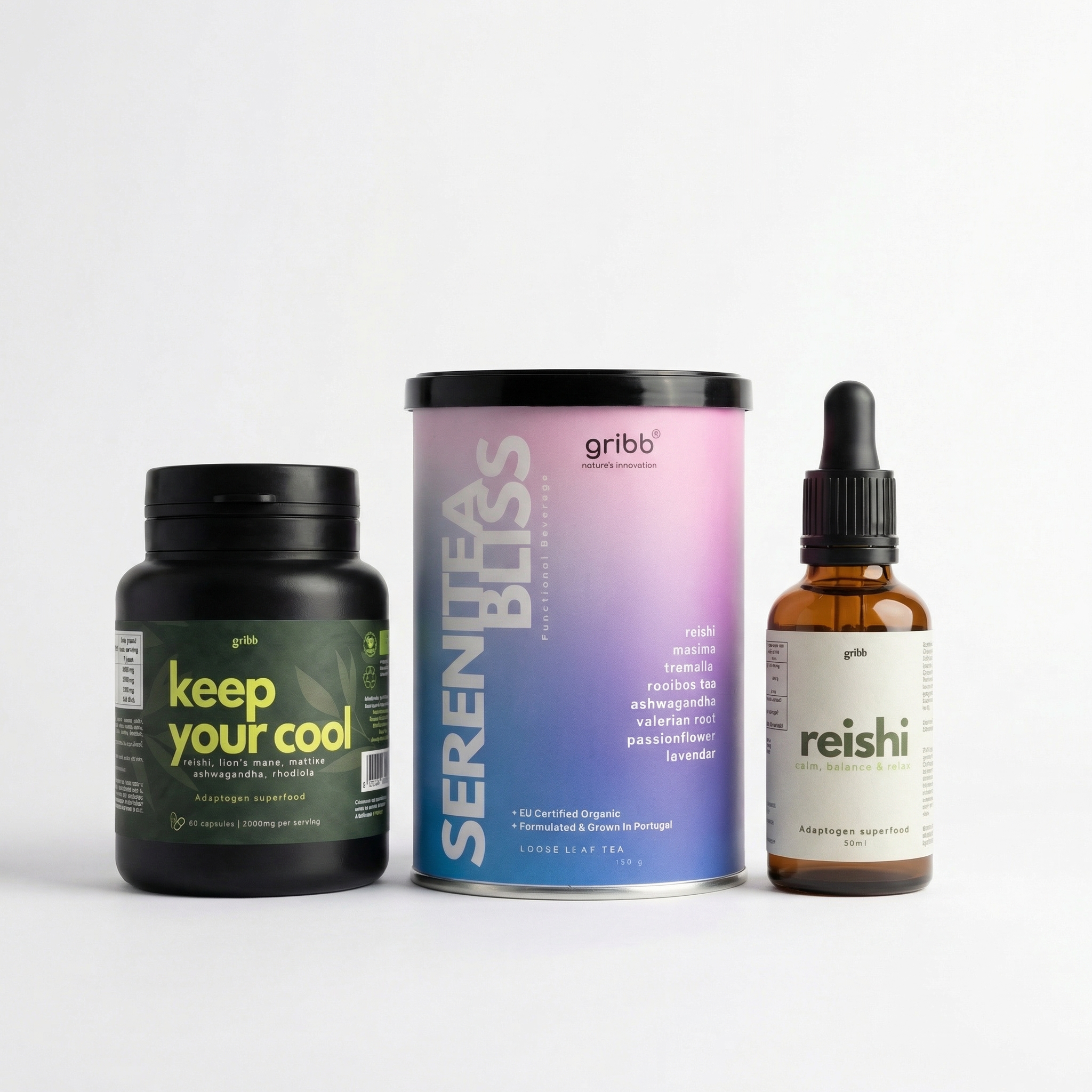
The trial used 980mg of reishi extract standardised to 6% triterpenes. Our Reishi products are dual-extracted (water + alcohol) at a 10:1 ratio from fruiting body grown on our farm in Portimão, Portugal — the alcohol extraction step specifically captures the ganoderic acid triterpene fraction the GABA pathway modulation is attributed to. A water-only extract would likely miss this [4]. If you're comparing reishi products for sleep specifically, the triterpene fraction and the presence of alcohol extraction are the details that matter most.
Expect 4–6 weeks of consistent use before evaluating. Reishi isn't an acute sleep aid — it's a nervous system recalibration that builds over time.
FAQ
Did reishi really outperform melatonin for sleep? In a single 2026 randomised controlled trial of 218 adults with chronic insomnia, yes — reishi extract produced a –8.7 point improvement on the Insomnia Severity Index versus –5.6 for melatonin 5mg over 8 weeks. This is one trial, not a practice-changing guideline, and requires replication.
How does reishi work for sleep? Through two distinct pathways: GABA-A receptor modulation (the same calming receptor system targeted by many prescription sleep aids, but more gently), and a gut microbiome-serotonin axis where reishi's polysaccharides influence serotonin precursor production.
Is reishi better than melatonin? For stress-driven, HPA-axis-related insomnia, the mechanisms suggest reishi addresses a more upstream cause. Melatonin is more relevant for circadian rhythm disruption (jet lag, shift work). They are different tools for different sleep problems.
How long does reishi take to work for sleep? Most clinical studies showing sleep benefits used 4–8 weeks of consistent use. This is consistent with the gut microbiome pathway needing time to establish.
Is reishi safe to take every night? Available safety data suggests reishi extract is possibly safe for up to 12 months in healthy adults. The main caveat: documented interactions with blood-thinning medication. Speak to a doctor before starting if you're on anticoagulants, blood pressure medication, or immunosuppressants.
This article is for informational purposes only and is not a substitute for medical advice. Gribb's products are not intended to diagnose, treat, cure, or prevent any disease.
References
- Xie C. Can't sleep? Take some shrooms: comparing reishi mushroom versus melatonin for chronic insomnia. Presented at: SLEEP 2026; June 2026. Via PatientCareOnline: https://www.patientcareonline.com/view/reishi-mushroom-extract-outperformed-melatonin-for-chronic-insomnia-in-new-study
- Chu QP, et al. (2007). Extract of Ganoderma lucidum potentiates pentobarbital-induced sleep via a GABAergic mechanism. Pharmacology, Biochemistry and Behavior. PMID: 17383716.
- Pan W, et al. (2021). Ganoderma lucidum promotes sleep through a gut microbiota-dependent and serotonin-involved pathway in mice. Scientific Reports. https://www.nature.com/articles/s41598-021-92913-6
- Recent Advances in the Preparation, Structure, and Biological Activities of β-Glucan from Ganoderma Species. PMC. https://www.ncbi.nlm.nih.gov/pmc/articles/PMC10419088/
Read more
Mushcoffee: Why Four Mushrooms Beat One (And Half the Caffeine Changes Everything)
Instant coffee has a reputation problem. Mushcoffee is here to fix it. In short: Gribb's Mushcoffee is a functional coffee product combining organic Arabica (50%) with 2,000mg of whole-fruiting-bod...
Read more
Nervous System Dysregulation: Signs, Causes, and How to Actually Fix It
You're tired all the time, but you can't relax. Small things spike your stress response out of proportion. The autonomic nervous system operates through two primary branches: sympathetic (mobilisat...
Read more