


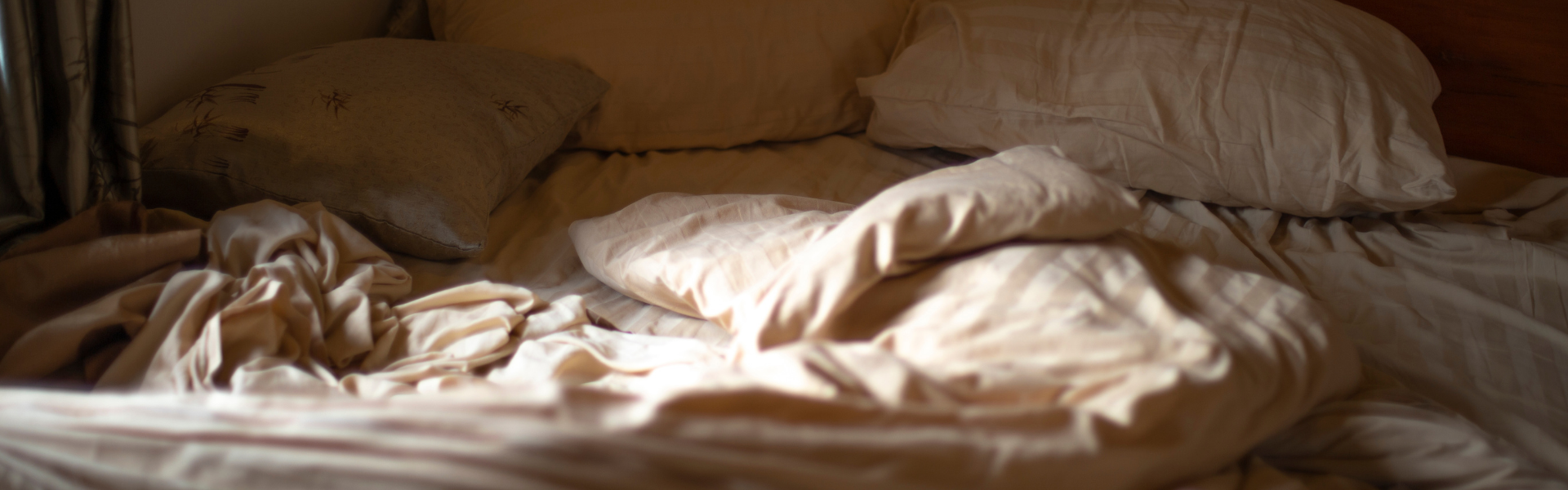
You're Not Bad at Sleeping. Your Nervous System Never Switches Off. (Reishi Helps.)
You get into bed. You're tired. Your body is done. But your brain doesn't get the memo. Thoughts run. You mentally rehearse conversations you haven't had. You track the time. You calculate how many hours you'll get if you fall asleep right now. You don't fall asleep right now.
This is not a sleep problem. This is a nervous system problem that shows up at bedtime.
The distinction matters, because treating them differently leads to completely different solutions.
Why your nervous system can't switch off
Your autonomic nervous system has two modes: sympathetic (active, alert, stress-responsive) and parasympathetic (rest, digest, recover). For sleep to initiate properly, you need a meaningful shift from sympathetic to parasympathetic dominance in the hours before bed.
In a healthy, non-depleted nervous system, cortisol naturally drops in the evening, melatonin rises, body temperature decreases, and the brain transitions into sleep readiness. This process is called the dim-light melatonin onset cycle, and it's elegant when it works.
When your nervous system is dysregulated — from chronic stress, erratic schedules, too much screen time, alcohol, or simply the sustained demands of modern life — cortisol stays elevated into the evening. It suppresses melatonin production. It keeps the sympathetic system activated. You lie in bed exhausted but alert. Tired and wired. The system is stuck.
Ganoderma lucidum (Reishi) contains triterpenoids and beta-glucans that act on the HPA axis and the GABAergic system — the same neurotransmitter pathway targeted by sleep medications like benzodiazepines, but without the dependency risk or morning impairment. A key study published in the Journal of Pharmacological Sciences (2012) found that Reishi polysaccharides increased total sleep time and specifically non-REM deep sleep duration in subjects. A 2004 clinical trial showed significant improvements in fatigue scores and sleep quality in adults with persistent fatigue syndrome after 8 weeks of Reishi supplementation.
What "bad sleep" actually costs you
One night of poor sleep reduces cognitive performance by roughly 20-40%. Immune function drops measurably after even a week of sub-optimal sleep. Cortisol the next day is higher, which makes the following night harder. The cycle feeds itself.
Long-term poor sleep is one of the strongest independent risk factors for cognitive decline, metabolic dysfunction, and cardiovascular disease. This is not alarmism. It's why sleep is the intervention with the highest ROI of any wellness action you can take. Nothing else you do in health or performance touches its impact.
Why melatonin is the wrong solution for most people
Melatonin is a timing signal, not a sleep inducer. It tells your brain when it's dark. For people with jet lag or shift work, it's appropriate. For the vast majority of people who can't sleep because their cortisol is too high in the evening, melatonin doesn't solve the actual problem. It's like giving someone a dinner bell when the kitchen isn't ready. Timing isn't the issue. The kitchen is the issue.
The issue is the sympathetic nervous system that won't stand down. Reishi addresses that.
The complete sleep protocol, not just the supplement
Reishi works best as part of a system. The supplement addresses the biological dysregulation; the habits create the conditions for it to work.
The 90-minute wind-down
90 minutes before sleep: dim lights, end screens (or use blue-light blocking). This initiates melatonin production. Reishi 60 minutes before bed — this is the optimal window based on absorption data.
The cortisol break
Don't check email, social media, or news in the last 90 minutes. Not because it's "wellness advice." Because cortisol spikes take 30-60 minutes to subside, and a spike at 10pm makes 11pm sleep impossible.
Temperature
Sleep onset requires core body temperature to drop 1-2 degrees Celsius. A cool shower before bed, or a cooler room (16-19°C) dramatically accelerates this process. This is one of the most evidence-backed sleep interventions and it costs nothing.
The morning anchor
Consistent wake time is more important than consistent bedtime for regulating circadian rhythm. Get outside within 30 minutes of waking. Morning light resets your cortisol morning peak, which makes evening cortisol drops more pronounced and reliable.
None of this is complicated. All of it works. The Reishi does the heavy lifting on the biological side while you create the behavioral conditions around it.
Take the ritual quiz. We'll build your protocol from scratch.
Nervous system support starts at the root. Six questions, personalized recommendation, no guesswork.
References
- Cui X.Y. et al. (2012). Extract of Ganoderma lucidum prolongs sleep time in rats. Journal of Pharmacological Sciences.
- Gao Y. et al. (2004). Ganoderma lucidum polysaccharides for fatigue and quality of life. Int. Journal of Medicinal Mushrooms.
- Tang W. et al. (2005). A randomized, double-blind, placebo-controlled study of a Ganoderma lucidum polysaccharide extract in patients with fatigue. Journal of Medicinal Food.
- Walker M. (2017). Why We Sleep: Unlocking the Power of Sleep and Dreams. Scribner.
- Leproult R., Van Cauter E. (2010). Role of sleep and sleep loss in hormonal release and metabolism. Endocrine Development.
- Xie L. et al. (2013). Sleep drives metabolite clearance from the adult brain. Science, 342(6156).
Read more

Perimenopause Brain Fog Is Real. And It's Not Just Your Hormones
You're in your late 30s or 40s. You can't remember where you put your keys, you lose words mid-sentence, you walk into a room and have no idea why you're there. You feel like you're slowly gettin...
Consulte Mais informação
Men's Burnout Looks Different. And Nobody Is Talking About It.
Men's burnout doesn't usually look like crying in the bathroom. It looks like being fine. Men's burnout typically presents as emotional flatness, irritability, fatigue, and low libido — not visib...
Consulte Mais informação