



Spring Clean Your Body and Mind (Not Just Your House)
Why Seasonal Reset Starts Within
Spring is often associated with cleaning.
Closets get reorganised.
Spaces are refreshed.
Windows are opened.
But while we focus on external environments, something equally important is happening internally.
Seasonal transitions influence the body’s nervous system, circadian rhythm, immune function and energy regulation.
Spring is not just a visual reset.
It is a physiological transition.
The Body Responds to Seasonal Change
As daylight increases, the body adjusts its internal clock.
Light exposure influences the suprachiasmatic nucleus (SCN), which regulates circadian rhythms and downstream processes such as hormone release, sleep-wake cycles and metabolism.
Research shows that seasonal changes affect:
• melatonin production
• cortisol rhythms
• immune activity
• mood and energy levels
These shifts can result in symptoms such as:
• fatigue
• brain fog
• irritability
• seasonal allergies
This is part of the body adapting — not a malfunction.
Why Spring Can Feel Dysregulating
After winter, the nervous system often operates in a more conservative, low-energy mode.
Spring introduces:
• increased light exposure
• higher social interaction
• more environmental stimulation
This creates a mismatch:
the environment speeds up
but the nervous system may not be fully recalibrated
This mismatch can contribute to:
• overstimulation
• reduced focus
• perceived “lack of motivation”
From a physiological perspective, this reflects neuroadaptation, not lack of discipline.
Spring Cleaning the Nervous System
The nervous system responds best to predictable signals of safety and rhythm.
Gradual regulation is more effective than abrupt change.
Evidence-based supportive behaviours include:
Morning Light Exposure
Exposure to natural light shortly after waking helps regulate circadian rhythms and improves alertness and sleep quality.
Movement
Regular physical activity influences neurotransmitter systems, including dopamine and serotonin pathways, supporting mood and energy.
Reducing Cognitive Load
Continuous digital stimulation increases attentional fragmentation and mental fatigue. Reducing input allows recovery of attentional systems.
Spring Cleaning the Body (Without “Detox” Myths)
The body already has highly efficient detoxification systems, primarily involving:
• the liver
• kidneys
• gastrointestinal tract
Scientific literature does not support the need for extreme detox protocols in healthy individuals.
Instead, supporting physiological processes is more effective:
• adequate hydration
• fibre intake
• micronutrient-rich foods
• regular meals
These factors support metabolic and elimination pathways without disrupting homeostasis.
Where Functional Mushrooms Fit
Functional mushrooms are not detox agents.
However, certain species have been studied for their role in immune modulation, oxidative stress response and neurophysiological support.
Mesima (Phellinus linteus)
Rich in polysaccharides studied for their role in immune regulation and gut-associated immune response.
Chaga (Inonotus obliquus)
Contains polyphenols and melanin compounds associated with antioxidant activity and cellular protection.
Reishi (Ganoderma lucidum)
Contains triterpenes and beta-glucans studied for their interaction with stress response and immune signalling pathways.
These compounds do not override the body. They may support systems involved in adaptation and regulation.
The Gribb Perspective
Spring is not a moment for aggressive change.
It is a moment for recalibration.
The body responds to:
• consistency
• rhythm
• environmental cues
When these are aligned, systems involved in:
• energy
• focus
• immune balance
begin to stabilise naturally.
Key Takeaway
Spring cleaning should not stop at your environment.
It should include your physiology.
The goal is not to force change.
It is to support the body’s ability to adapt.
Wellness is not intensity.
It is regulated consistency.
📚 REFERENCES
- Czeisler CA & Buxton OM. The Human Circadian Timing System and Sleep–Wake Regulation. Cold Spring Harbor Perspectives in Biology, 2017.
- LeGates TA, Fernandez DC, Hattar S. Light as a central modulator of circadian rhythms, sleep and affect. Nature Reviews Neuroscience, 2014.
- McEwen BS. Protective and damaging effects of stress mediators. New England Journal of Medicine, 1998.
- Lopresti AL et al. A review of lifestyle factors that contribute to important pathways associated with major depression. Journal of Affective Disorders, 2013.
- Kiecolt-Glaser JK et al. Stress, inflammation, and health. Nature Reviews Immunology, 2015.
- EFSA Panel on Dietetic Products. Detox diets and liver function: scientific review. EFSA Journal.
- Wasser SP. Medicinal mushrooms in human clinical studies. Applied Microbiology and Biotechnology, 2011.
- Lindequist U et al. The pharmacological potential of mushrooms. Evidence-Based Complementary and Alternative Medicine, 2005.
- Valverde ME et al. Edible mushrooms: improving human health. International Journal of Microbiology, 2015.
Read more

Why Your Brain Feels Foggy (And It’s Not Just Sleep)
Many people describe the same experience: • difficulty focusing• forgetting simple things• feeling mentally slow• struggling to stay present in conversations This state is often called brain fog. D...
Consulte Mais informação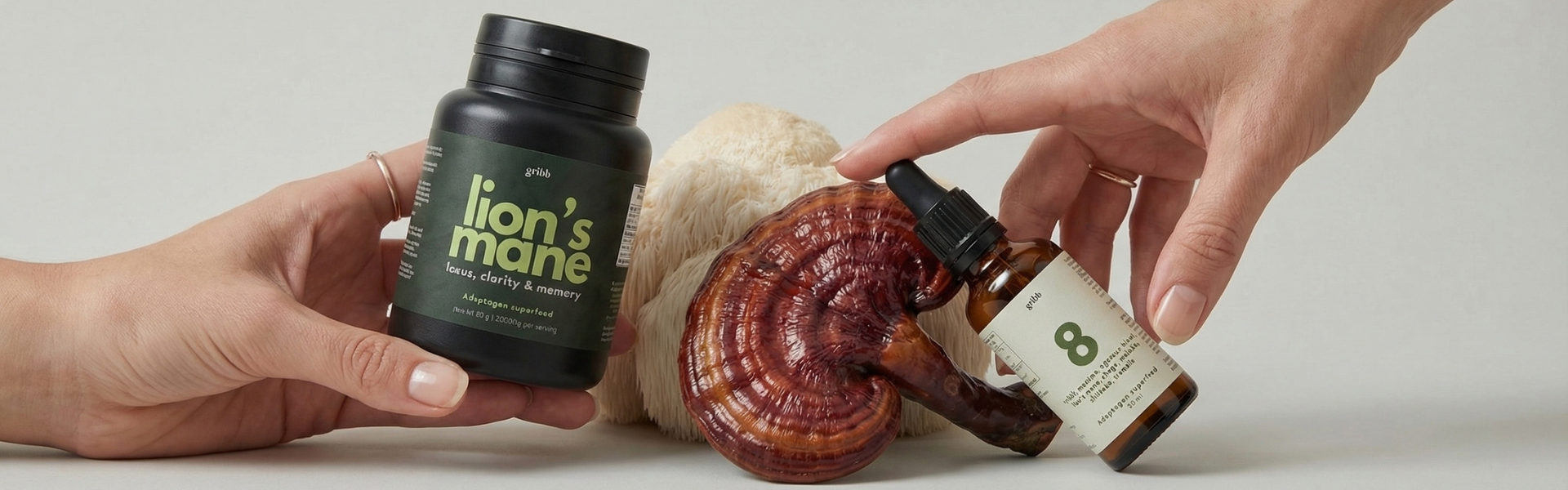
Why Spring Is the Worst Time to Start a Wellness Routine (And What to Do Instead)
.Everyone tells you to reset in January or bloom in April. Here's why those timelines work against you — and what actually sticks. Let's be honest. Something about spring makes everyone feel like...
Consulte Mais informação