
%20has%20long%20been%20celebrated%20in%20traditional%20medicine%20and%20modern%20research%20for%20its%20powerful%20immune-supporting%20properties.%20Yet%20in%20recent%20years,%20many%20consumers%20in%20the%20Euro...)
Turkey Tail Mushrooms in the EU: The Truth Behind the Regulations & Our Commitment to Traditional Medicinal Fungi
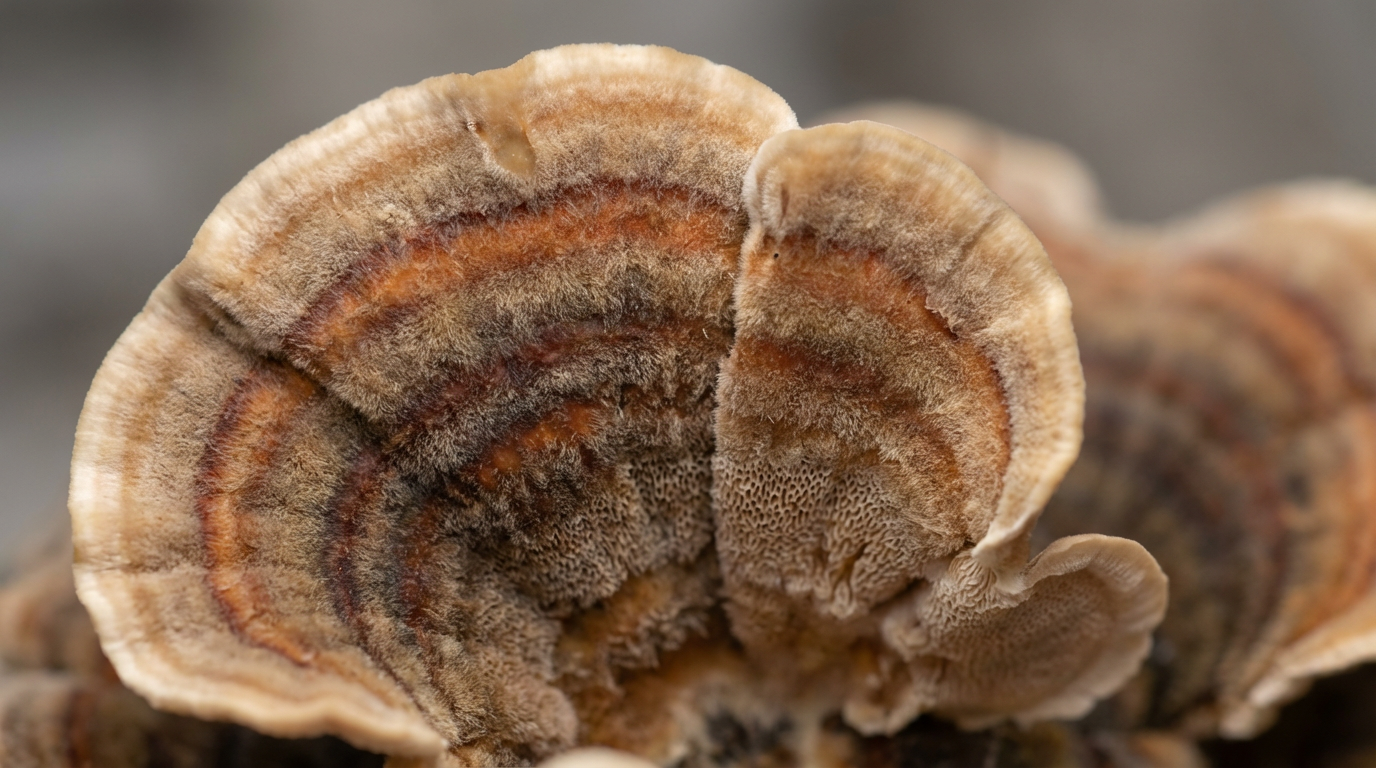
Turkey Tail (Trametes versicolor) has long been celebrated in traditional medicine and modern research for its powerful immune-supporting properties. Yet in recent years, many consumers in the European Union have been confused — and even frustrated — by the disappearance of Turkey Tail products from shelves and online shops. Let’s unpack what’s really going on, why it matters, and how we at Gribb are responding with integrity, science, and a clear commitment to our community.
1. What Happened With Turkey Tail in the EU?
In the EU, food safety and dietary supplement ingredients are regulated under the Novel Food Regulation (EU) 2015/2283, which defines a novel food as any food or ingredient “not consumed to a significant degree by humans in the EU before May 15, 1997.”
Turkey Tail — despite being used for centuries in Asia and consumed around the world — is currently classified by EU authorities as requiring pre-market authorization under this system. Because no full authorisation has yet been granted, products containing Turkey Tail for human consumption are effectively restricted from sale in the EU or are being pulled from the market when regulators enforce compliance.
This is similar to other functional mushrooms, like certain Cordyceps or mycelium-on-grain products, which fall under strict novel food rules unless they can clearly demonstrate pre-1997 consumption or demonstrate safety through an approved authorisation process.
It’s important to note: this isn’t a health ban driven by evidence of harm. It’s a regulatory classification based on historic consumption data. This doesn’t mean Turkey Tail is unsafe — only that EU law currently treats it as requiring a formal approval process.
2. This Is Not New — and Other Brands Are Still Trying
While some marketing messages might paint this as a “recent ban,” it’s not accurate to call it sudden or emergent. The EU Novel Food framework has been in place since 2015 and stems from earlier rules going back to Regulation EC 258/97 (from 1997), which used the same cutoff criteria.
Many brands continue to list or market Turkey Tail products — sometimes as veterinary supplements, herbals not marketed for ingestion, or in forms that sidestep the EU food supplement classification. These work-arounds reflect the complexity of the regulatory landscape, not a contradiction in the science.
3. Why This Matters — and Why We Don’t Agree With the Restriction
We love Turkey Tail — culturally, scientifically, and as part of the global tradition of medicinal mushrooms. There is solid evidence showing it supports immune function, antioxidant activity, and even beneficial modulation of gut flora.
We believe people should have access to responsible, well-sourced natural products. That’s why we:
🔹 Support calls for reform of the EU Novel Food rules that recognize long-standing traditional use and modern safety evidence. Change.org
🔹 Advocate for regulation that balances consumer safety with cultural and botanical history.
🔹 Continue to follow all regulatory requirements — even if we disagree with them — because compliance protects you and us.
4. What We Are Growing Instead: Mesima
While we work toward broader access for Turkey Tail and other traditionally used fungi, we’re actively cultivating Mesima (Phellinus linteus) — a powerful functional mushroom with many overlapping benefits.
Why Mesima?
Mesima is:
✔️ Traditionally used in Asian herbal systems for immune modulation, anti-inflammatory support and cellular resilience.
✔️ A close functional cousin in effect to Turkey Tail, particularly around immune balance and inflammation support.
✔️ A mushroom we can responsibly cultivate and share within the EU without regulatory barriers.
Mesima’s bioactive compounds — including polysaccharides and phenolics — have been studied for supporting immune communication and cellular health in a way that parallels some Turkey Tail mechanisms (though the species are different culturally and biologically).
We see Mesima not as a replacement but as a complementary ally — a mushroom whose benefits we can responsibly bring to our community today. And we will continue to advocate for expanded access for Turkey Tail, including potential re-evaluation of its regulatory categorization based on historical and scientific evidence.
5. What You Can Do & What This Means for You
-
Know your rights: EU food safety rules are designed to protect consumers, but they must evolve to reflect traditional evidence and modern research.
-
Ask questions: Look at product labeling, origins, and the form of the mushroom (fruiting body vs mycelium).
-
Support reform: Many growers, researchers, and consumers are advocating for a thoughtful revision of the Novel Foods framework so that traditional foods are recognized for what they are: foods with a history.
-
Explore Mesima: As part of your functional mushroom journey, Mesima offers real benefits today and aligns with EU compliance.
We remain committed to transparency, science, tradition, and the well-being of our community.
🜂 Together in Wellness, Gribb
References & Further Reading
Regulation & Policy
-
EU Novel Food Regulation — definition and framework of novel foods. Medfiles
-
Novel Food Catalogue and Turkey Tail classification updates. Mogo Farm
-
Change.org petitions and community responses to Turkey Tail classification. Change.org
Science & Traditional Use
-
Trametes versicolor medicinal properties, antioxidant and therapeutic potential. ScienceDirect
-
Historical regulatory context — pre-1997 cutoff rules. EUR-Lex
References & Further Reading (Mesima)
-
Kim, H. M. et al. (2011). Anti-inflammatory effects of Phellinus linteus polysaccharides.
-
Lee, I. K. et al. (2015). Phenolic compounds and immune modulation in Phellinus linteus.
-
Wasser, S. P. (2014). Medicinal mushroom science: history, current status, and future trends.
-
Zhang, M. et al. (2019). Polysaccharides from medicinal mushrooms and immune regulation.
Read more
Winter Immunity: The functional mushroom guide
Built by Nature. Perfected by Fungi. Ideal for those who like to understand why things work — without complications. Winter isn’t just cold.It’s darker days, disrupted sleep, higher stress, more in...
Read more
How to Support Your Nervous System Without Shutting Down
Calm is often misunderstood. It’s not about slowing your life down.It’s not about becoming less responsive, less driven, or less alive. Real calm is about internal safety — the ability to move thro...
Read more