



The Collagen Lie: Why Your Nervous System Matters More Than Collagen Supplements for Skin Health
Why Your Skin Listens to Your Nervous System More Than Your Skincare
Primary Keywords: natural collagen support, collagen production skin health, skin and nervous system
Secondary Keywords: collagen supplements truth, stress and collagen loss, skin inflammation wellness
The Truth About Collagen and Skin Health
Collagen has become one of the most marketed molecules in modern wellness.
Powders.
Capsules.
Drinks.
“Liquid collagen” shots promising overnight glow.
The message is simple: take collagen and your skin improves. But biology is more complex.
Your skin doesn’t simply absorb collagen and place it where wrinkles exist.
Instead, collagen is broken down into amino acids during digestion.
Those amino acids may then be used by the body wherever they are needed most.
Muscle repair.
Immune function.
Tissue maintenance.
Not automatically the skin.
This doesn’t mean collagen supplements are useless — but the narrative surrounding them is often oversimplified and exaggerated.
The real question is not only how much collagen you consume, but whether your body is in a state where collagen production can happen efficiently.
And this is where lifestyle and physiology matter more than marketing.
Your Skin Listens to Your Nervous System
Skin health is deeply connected to nervous system regulation.
When the body perceives chronic stress, it activates the hypothalamic–pituitary–adrenal (HPA) axis, releasing cortisol and inflammatory mediators.
Long-term stress responses have been associated with:
-
Reduced collagen synthesis
-
Increased skin inflammation
-
Slower tissue repair
-
Disruption of the skin barrier
In other words, when the nervous system stays in survival mode, the body prioritises short-term survival over long-term repair.
Collagen production becomes less of a priority.
This is why skincare routines sometimes fail to deliver results despite high-quality products.
The skin responds to internal regulation before external application.
Your skin listens to your nervous system more than your skincare.
The Skin–Stress–Inflammation Connection
Inflammation is one of the primary drivers of accelerated skin ageing.
Stress can increase inflammatory signalling and oxidative stress within tissues.
This may contribute to:
-
Loss of skin elasticity
-
Reduced collagen density
-
Increased sensitivity
-
Uneven skin tone
The solution is rarely found in aggressive skincare treatments alone.
Instead, supporting the internal environment where collagen is produced becomes essential.
Rituals That Support Collagen Naturally
Instead of searching for one miracle ingredient, skin health often improves through consistent daily habits.
Small rituals signal safety to the nervous system and support physiological balance.
Examples include:
Slow morning routines
Starting the day without immediate digital stimulation allows cortisol rhythms to stabilise.
Warm beverages instead of rushed caffeine spikes
Gentle rituals encourage parasympathetic nervous system activity.
Consistent sleep rhythms
Deep sleep supports tissue repair and collagen synthesis.
Anti-inflammatory nutrition
Polyphenols, vitamin C and micronutrients support collagen-building pathways.
These habits create the internal environment where skin repair processes function optimally.
Where Functional Mushrooms Fit
Functional mushrooms are not collagen replacements. But some species traditionally used in wellness may support the systems that influence skin health.
For example:
Tremella (Snow Mushroom)
Traditionally associated with skin hydration and moisture retention. Tremella polysaccharides have been studied for their ability to support skin hydration and antioxidant activity.
Reishi (Ganoderma lucidum)
Known for its role in supporting stress adaptation and immune balance, which may indirectly reduce inflammation-related skin disruption.
Lion’s Mane (Hericium erinaceus)
Research exploring the gut–brain axis suggests it may support neurological signalling and stress resilience — factors that influence skin through the gut–skin and stress pathways.
These mushrooms do not create beauty overnight.
But they can support the regulatory systems that allow skin health to stabilise over time.
The Problem With the “Beauty Quick Fix”
The beauty industry often frames skin health as something that can be purchased instantly.
But collagen synthesis is a biological process influenced by multiple factors:
-
Stress physiology
-
Nutrient status
-
Sleep quality
-
Inflammatory balance
-
Hormonal signalling
No supplement — collagen or otherwise — overrides these systems.
Real skin health emerges from regulation and consistency.
The Gribb Perspective
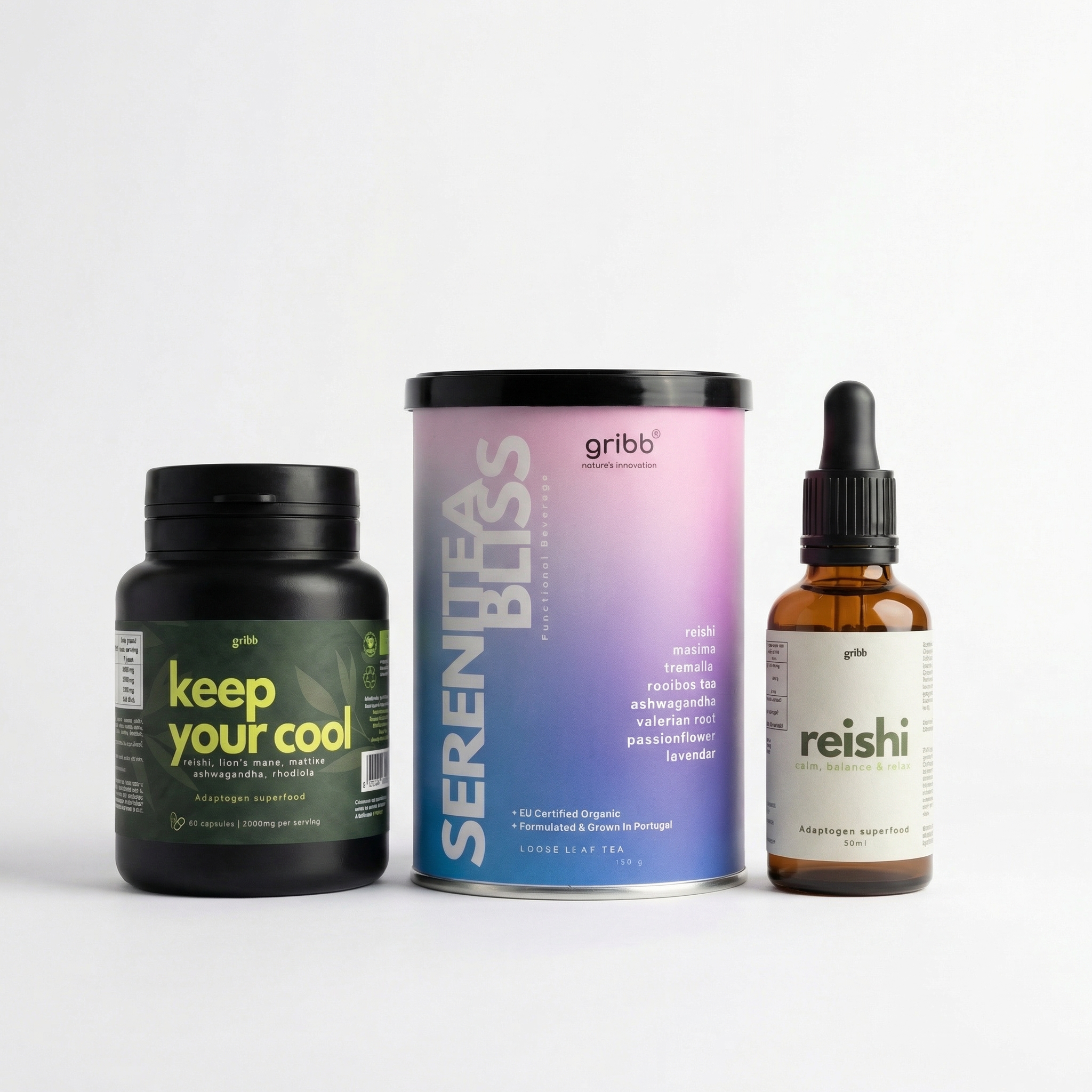
At Gribb, beauty isn’t treated as a surface-level problem. It is seen as a reflection of internal balance.
Healthy skin often emerges when:
-
The nervous system feels safe
-
Inflammation is regulated
-
Digestion is balanced
-
Sleep rhythms are consistent
External skincare can support the process. But internal regulation often leads the transformation.
Key Takeaway
Collagen supplements alone do not guarantee better skin.
Your body must be in a state where collagen production is supported.
And that environment begins with nervous system regulation, consistent rituals and long-term balance.
Beauty, in many ways, is the visible result of internal harmony.
References
-
Proksch et al. (2014). Oral collagen peptide supplementation and skin elasticity.
-
Shuster et al. (1975). Collagen content in human skin and ageing.
-
Slominski et al. (2013). Stress signalling in skin physiology.
-
Thring et al. (2009). Anti-inflammatory and antioxidant effects of Ganoderma lucidum.
-
Hyde et al. (2020). Tremella polysaccharides and skin hydration research.
Read more

The Gut-Brain-Skin Axis and Why Regulation Matters
Gut Health Isn’t Just Digestion — It’s Mood, Skin and Energy When people think about gut health, they think about digestion. Bloating. Gas. Food sensitivity. But the gut does much more than proces...
Read more
Why Women Experience Burnout More Often
The Nervous System, Invisible Work & Chronic Stress Burnout Is Not Just About Working Too Much Burnout is often described as a workplace problem. Too many hours.Too much pressure.Too little res...
Read more